Dog Trainer Bible Review 2026 – Is This the Best Dog Training Guide for Beginners?
When you purchase through links on our site, we may earn an affiliate commission at no extra cost to you. We only recommend products we’ve personally tested, thoroughly researched, or believe will genuinely help you and your dog. Here’s how it works.
The first week with a new dog is humbling. The leash turns every walk into a tug-of-war. The crate becomes a nightly negotiation.
The YouTube tutorials contradict each other, and somewhere around 2 am, when the barking starts again, you realize that “figure it out as you go” was not actually a training plan.
That is the situation most first-time dog owners find themselves in when they discover the Dog Trainer Bible.
And the question they want answered before spending $47 is this: Does this actually work, or is it just another dog training guide they don’t need?
For a first-time owner dealing with everyday behavioral issues like pulling, barking, jumping, and house training, the Dog Trainer Bible is a practical, affordable starting point.
It is not a substitute for a certified professional when the problems are serious. But for the chaos most new dog owners are living with, it covers the fundamentals that change daily life.
This review breaks down exactly what is inside the product, who it genuinely helps, where it falls short, and how it stacks up against professional dog training and free alternatives.
I’ve reviewed the full content scope, cross-referenced the training methodology against guidelines from the American Veterinary Society of Animal Behavior (AVSAB), and pulled honest user feedback from across the web so you can make this call with confidence, not hope.
Let’s begin.

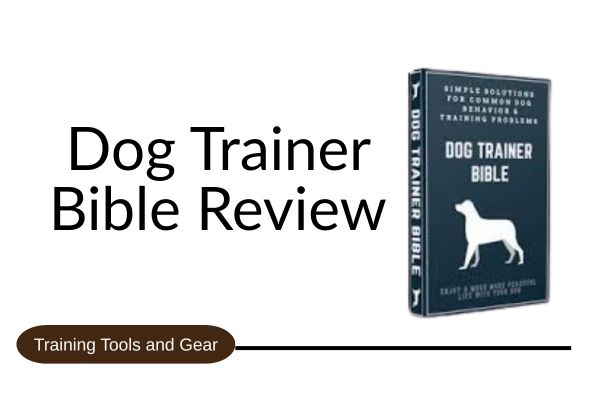
Dog Trainer Bible
Best for: First-time dog owners dealing with everyday behavioral issues like leash pulling, nighttime barking, house training, and crate resistance.
Not for: Dogs with aggression, severe reactivity, or clinical separation anxiety. Those need a certified professional, not an eBook.
Price: $47 one-time. No subscription. Instant access.
What you get: 37 eBooks covering dog selection, daily care, nutrition, basic obedience, behavior correction, trick training, and health guidance. One structured system built on positive reinforcement science.
Pros: Replaces the fragmented, contradictory free advice most new dog owners drown in with a single, consistent framework that actually delivers results.
Cons: No video instruction. Visual learners will need to supplement with free AKC or Chewy video content for timing-sensitive techniques.
Verdict: For a first-time dog owner dealing with normal first-year chaos, this is the most affordable structured starting point on the market. At $47, it costs less than a single private training session and covers more ground than most group class series at three times the price.
The dog that listens, walks calmly, and settles on command is not out of reach. It is 10 minutes a day and one decision away.
Why Trust My Recommendation?
My interest in dog training did not start with research. It started with Biscuit, my own dog, who turned our home into controlled chaos the moment we brought him through the door.
Pulled leashes, nighttime barking, furniture he treated as his personal chew collection. I tried YouTube. I tried Reddit. I got contradictory advice from both and a dog who was getting worse, not better.
That frustration pushed me to do this properly.
I worked directly with certified professional trainers, tested the techniques they recommended on my dog, Biscuit, in my home, and paid close attention to what actually worked for a normal person without a professional handler’s timing or experience.
That gap between what certified trainers teach and what first-time owners can realistically apply is what this site exists to close.
Every product and training resource I review goes through the same evaluation process: I assess the methodology against current positive reinforcement science and AVSAB guidelines, compare it honestly against professional alternatives and real market costs, and report what the methods produce in practice for beginners, including where they fall short.
I do not recommend products I would not use myself, and I do not omit limitations to protect a commission.
My recommendations are built for first-time dog owners who want research-backed guidance, not polished sales copy. If something is not worth your money, I will tell you that too.
What Is the Dog Trainer Bible?
Most dog training products either overwhelm you with theory or undersell what’s actually inside. The Dog Trainer Bible does neither, which is part of what makes it worth understanding before you buy.
It is a digital collection of 37 eBooks, sold as a one-time purchase for $47, covering the full arc of dog ownership from choosing the right breed before you bring a dog home, all the way through fixing behavioral problems in a dog you’ve had for months.
It is not a subscription. There are no recurring fees. You pay once, and the content is yours.
The collection is delivered as an instant digital download, hosted on Thinkific, the same platform used by course creators and educators across a wide range of professional fields.
Once you purchase, you access the material through a Thinkific account.
There are no physical books shipped. Everything is in PDF and digital formats, so you can read on a laptop, tablet, or phone, or print individual sections if you prefer paper.
The creator behind the product is Dejan Majkic. The content spans seven broad areas, including dog selection and pre-adoption planning, essential daily care, nutrition (including homemade recipe guides), basic obedience training, behavior problem correction, trick training, and health guidance.
That breadth is the product’s main selling point, and also one of its challenges, which I’ll cover honestly in the limitations section.
At $47, it costs less than a single private training session with a local professional, where rates typically run $75 to $150 per hour.
It is significantly cheaper than a group obedience class series, which nationally averages $150 to $300 for a 6-week program. That price comparison matters, but cost alone is not a reason to buy anything.
What matters is whether the content inside is actually useful for the person buying it.
The short answer is yes, with a specific kind of buyer in mind. The next two sections tell you exactly who that is.
>> Get the Dog Trainer Bible on the official website <<
Who Created It and What Is Their Background?
Credentials matter more in dog training than most people realize. The method a trainer uses, and the science behind it, directly affect whether your dog improves or gets worse.
So, before recommending any training resource, it’s worth being honest about what the creator brings to the table.
The Dog Trainer Bible was created by Dejan Majkic. Based on publicly available information, Majkic is a dog training enthusiast and content creator rather than a credentialed professional in the formal sense.
There is no publicly verified CPDT-KA (Certified Professional Dog Trainer – Knowledge Assessed), CDBC (Certified Dog Behavior Consultant), or IAABC (International Association of Animal Behavior Consultants) certification attached to his name at the time of this review. [FACT CHECK NEEDED: Credentials could not be independently verified through professional registries at the time of writing.]
That is worth knowing. It does not automatically disqualify the content, but it does change how you should use it.
For context, a CPDT-KA-certified trainer has passed a standardized examination covering learning theory, animal husbandry, and training equipment.
A CDBC goes further, requiring documented case hours and a deeper focus on behavior modification.
These credentials exist because dog training is an unregulated industry in the United States. Anyone can call themselves a trainer and sell a course.
The Dog Trainer Bible’s content reflects, based on its methodology, an approach consistent with positive reinforcement principles, which align with the position statement of the American Veterinary Society of Animal Behavior (AVSAB). That is a meaningful signal.
A guide built on reward-based science, even without a credential attached to the author’s name, is considerably safer and more effective than one rooted in dominance theory or punishment-based techniques, which the AVSAB has formally discouraged due to documented risks of fear and aggression.
Compare this to alternatives such as Andrea Arden, a certified CPDT-KA trainer and author of the Barron’s Dog Training Bible, or the AKC’s training resources, which are built on decades of input from credentialed practitioners. Those carry a higher authority baseline.
The Dog Trainer Bible sits in a different tier because it is practitioner-adjacent content at a consumer price point, built for new owners who need accessible guidance rather than clinical behavior modification.
For the buyer who understands that distinction, the product delivers real value. For the buyer whose dog has serious behavioral issues, the credential gap matters more than the price gap.
What’s Inside — The Full Content Breakdown
One of the most common complaints about multi-volume digital products is that the number sounds impressive, and the contents disappoint.
Thirty-seven eBooks could mean 37 genuinely useful guides, or it could mean one solid guide padded into 37 pieces.
Based on the content scope, the Dog Trainer Bible lands closer to the former, though not without caveats.
The collection is organized across seven major topic areas. Here is what each covers and why it matters to a new dog owner.
Dog Selection and Pre-Adoption Planning
Dog selection and pre-adoption planning cover how to choose the right breed for your lifestyle, living situation, and activity level. This is content most people skip and then regret.
A high-energy working breed in a small apartment without a yard is a training problem waiting to happen.
Getting this decision right before day one eliminates a category of behavioral issues entirely.
Essential Daily Care
Essential daily care covers the foundational routines that new owners often underestimate, such as feeding schedules, exercise requirements, grooming basics, and sleep.
These are important for training because a dog that is under-exercised, overtired, or nutritionally inconsistent is harder to train. Energy state affects learning capacity directly.
Nutrition and Homemade Recipes
Nutrition and homemade recipes include guidance on evaluating commercial foods alongside homemade meal options.
This is one of the more niche inclusions in the collection. It adds breadth, but is less central to the behavioral training most buyers are purchasing this for.
Basic Obedience Training
Basic obedience training is the core of the product for most buyers. It covers sit, stay, come, down, and loose-leash walking through structured, step-by-step instruction.
This section is built around positive reinforcement mechanics, such as rewarding the behavior you want, ignoring or redirecting the behavior you don’t want, and repeating with consistency across short daily sessions.
Behavior Problem Correction
Behavior problem correction addresses the specific issues that drive most people to buy a training guide in the first place: leash pulling, nighttime barking, jumping on guests, biting and nipping, house training accidents, and crate resistance.
Each problem gets its own dedicated coverage with practical protocols rather than vague advice.
Trick Training
Trick training covers more advanced commands and fun skills beyond the basics of behavior.
For a new dog owner, this section becomes relevant once the foundational obedience work is solid, typically after 4 to 8 weeks of consistent daily practice.
It keeps training engaging for both the dog and the owner, which matters for long-term consistency.
Health Guidance
Health guidance rounds out the collection with general wellness information, including recognizing signs of illness, understanding common health issues by breed type, and knowing when a vet visit is necessary rather than a training adjustment.
Taken together, the 37 eBooks function less like 37 separate books and more like a modular curriculum.
A first-time dog owner working through the collection in a logical sequence, care basics first, then obedience, then behavior correction, gets a structured education in dog ownership that most people piece together from scattered sources over months of trial and error.
The gap is video. Everything described above is text-based. For learners who need to see timing, body language, and technique demonstrated in real time, that absence matters. I’ll cover it directly in the limitations section.
>> Get the Dog Trainer Bible on the official website <<
Who Is the Dog Trainer Bible For? (And Who Should Skip It)
Most training products sell to everyone and serve almost no one well. The Dog Trainer Bible has a specific ideal buyer, and being honest about who that is, and who it is not, is the most useful thing this review can do for you right now.
The product was built for the first-time dog owner who is overwhelmed, inconsistent, and consuming too much contradictory advice from too many free sources.
If that description fits your situation, the guide is designed around exactly the problems you are dealing with. If it does not fit, there are better options for your money, and I will tell you what they are.
The honest version of this section is the one that saves you $47 if you are the wrong buyer, and gives you confidence to spend it if you are the right one.
Perfect For: The Exhausted First-Time Dog Owner
Picture the first three months of dog ownership for most people.
The morning walk starts with 10 minutes of the dog pulling toward every lamppost on the block. The evening ends with 45 minutes of barking from the crate before the dog finally settles.
Somewhere in between, there was a house accident on the rug, a chewed shoe, and a Google search that returned 14 conflicting opinions on whether you should use a crate at all.
That is not a discipline problem. That is a system problem.
The dog is not broken. The owner simply has no consistent framework to work from, and dogs trained inconsistently learn inconsistent behavior.
This is exactly the gap the Dog Trainer Bible is designed to fill. Instead of 11 YouTube channels with 11 different philosophies, the buyer gets one structured system that covers the issues that actually dominate the first year of dog ownership, such as leash pulling, nighttime settling, house-training schedules, crate introduction, jumping on guests, and basic command reliability.
The format works particularly well for this buyer because it is self-paced. A new dog owner does not have 3 hours to sit through an online course. They have 10 minutes before work and 15 minutes after dinner.
The eBook format lets them read the relevant section, apply it that evening, and return to it the next day. That fits the reality of how new dog owners actually have time to learn.
The buyer who gets the most from this product is typically a first-time dog owner in a suburban household, dealing with a puppy or a recently adopted adult dog, who has tried free resources, found them contradictory or incomplete, and wants one place to get reliable, beginner-friendly guidance without spending $500 on professional classes upfront.
>> Get the Dog Trainer Bible on the official website <<
Not Ideal If You Need These Things
If your dog has shown aggression toward people or other dogs, this guide is not the right tool, and buying it instead of hiring a professional is a decision you may regret.
Aggression, severe resource guarding, fear-based reactivity, and serious separation anxiety are clinical behavioral issues.
They require an in-person assessment by a certified professional who can read the dog’s body language in real time, adjust the approach based on what they observe, and create a behavior modification plan tailored to that dog’s history and triggers.
No eBook can do that, and any product that claims otherwise is overselling.
The cost context matters here. A certified professional dog trainer charges $75 to $250 per private session, and a structured behavior modification program typically runs $500 to $2,000, depending on the severity of the issues and the number of sessions required. That is genuinely expensive.
However, for a dog with aggression toward people, the cost of not getting professional help, in terms of liability, injury risk, and the dog’s long-term welfare, is higher than the trainer’s fee.
The Dog Trainer Bible is a legitimate and affordable tool for mild to moderate everyday behavioral issues.
It is a complement to professional help in some cases, and a standalone solution for many new owners dealing with normal first-year chaos. It is not a substitute for clinical behavior work when the stakes are serious.
Also worth stating plainly is that if you are a primarily visual learner who absorbs information by watching rather than reading, this product will frustrate you. The entire collection is text-based. There are no video demonstrations included.
Dog Trainer Bible Review — What We Like
Honest reviews earn trust by clearly covering both limitations and strengths. However, the strengths of this product are real, and for the right buyer, they are significant enough to justify the purchase without hesitation. Here is what the Dog Trainer Bible genuinely gets right.
Comprehensive Coverage Under One Roof
The fragmented approach to dog training is more damaging than most new owners realize.
A Reddit thread recommends one method for leash pulling. A YouTube video recommends a different one. A TikTok clip contradicts both.
The dog receives three different signals from three different techniques applied inconsistently across a single week, and learns nothing reliably as a result.
Dogs learn through repetition and consistency. When the rules change depending on which source the owner consulted that morning, the dog cannot build the clear associations that training depends on.
This is not a discipline failure. It is a communication failure caused by an inconsistent system.
The Dog Trainer Bible eliminates that problem by putting everything inside one framework.
Potty training schedules, crate introduction protocols, leash-walking techniques, basic command sequences, and behavior correction for the most common issues are all included in the same purchase, built on the same underlying methodology.
A new dog owner working through the collection does not have to reconcile competing philosophies.
They learn one system, apply it consistently, and the dog responds to consistent signals.
For a first-time owner, that consolidation alone is worth a significant portion of the $47 price. The alternative is spending weeks, sometimes months, testing contradictory free advice before landing on something that works.
Beginner-Friendly Language and Step-by-Step Structure
Dog training literature has a jargon problem. Terms like operant conditioning, variable-ratio reinforcement schedules, and counterconditioning are accurate, but they create a barrier for the new dog owner who just wants to stop their dog from jumping on every visitor who walks through the door.
The Dog Trainer Bible is written to remove that barrier. The instructions are plain, direct, and structured in the sequence a new dog owner needs to follow.
The obedience training content in particular is organized so that each skill builds on the previous one, which matters because training foundations are cumulative.
A dog that does not reliably respond to “sit” in a calm environment is not ready to practice “sit” at the front door when the doorbell rings.
The inclusion of training schedules and structured daily plans is one of the product’s most practical features.
Consistency is the single most important factor in dog training outcomes, and consistency requires a routine that the owner can actually follow.
Knowing what to practice, in what order, for how long, and how often, removes the guesswork that causes most new dog owners to drift away from training after the first two weeks.
Ten minutes of focused, structured practice twice a day produces faster results than 45 minutes of unfocused repetition.
The guide builds that principle into its daily structure rather than leaving the owner to figure out pacing on their own.
Strong Value Compared to Professional Training Costs
The $47 price point deserves a direct comparison against what dog training actually costs in the current market, because the gap is larger than most new owners expect.
Group obedience classes at national chains like PetSmart and Petco run $109 to $149 for a 6-week course, which averages out to roughly $20 per session in a group of 6 to 8 dogs.
Private lessons with a certified local dog trainer typically run $75 to $150 per session, with most trainers recommending a minimum of 4 to 6 sessions to see meaningful progress, putting a basic private package at $300 to $900.
Board-and-train programs, where the dog stays with the trainer for 2 to 4 weeks, commonly run $1,500 to $5,000 depending on location and the trainer’s credentials.
Against those numbers, $47 for a structured, comprehensive training resource is a genuinely low-risk entry point.
For a new dog owner who wants to build a solid foundation before committing to professional classes, or who wants to handle everyday behavioral issues without that expense, the math is straightforward.
Truth is, the Dog Trainer Bible is just the beginning, not the final step in your dog training journey.
Dog owners who use it well will build the foundational knowledge that makes professional training sessions more productive if they pursue them later.
Owners who use it and find it sufficient for their situation will have saved several hundred dollars. Either outcome represents a reasonable value for a $47 purchase.
>> Get the Dog Trainer Bible on the official website <<
Dog Trainer Bible Review — What Could Be Better
A review that only covers strengths is a sales page with a different label.
The limitations below are real, specific, and worth understanding before you buy. None of them is a dealbreaker for the right buyer.
However, for some readers, one of these points will be the reason to look elsewhere, and you deserve to know that before the purchase, not after.
No Video Instruction or Live Feedback
Dog training has a timing problem that text cannot fully solve.
When you reward a dog for sitting, the treat needs to arrive within approximately 1 to 2 seconds of the dog’s rear hitting the floor.
Any longer and the dog associates the reward with whatever they did next, which might be standing up, sniffing the ground, or looking away.
That precision is easy to describe in writing. It is genuinely difficult to execute correctly without seeing it demonstrated first.
The same applies to reading body language. A dog showing whale eye (the whites of the eyes visible), a low tucked tail, or a stiffened posture is communicating stress.
A new dog owner who does not know what to look for will miss those signals and push the training session past the point where the dog can learn effectively.
Video makes these cues visible in a way that written descriptions, however clear, cannot fully replicate.
The Dog Trainer Bible covers technique in plain language, but it does not show you what correct technique looks like in motion.
For auditory and visual learners, that gap will slow progress and create frustration in the early weeks of training.
The practical workaround is to supplement the written guide with free video resources from credible sources. The AKC’s YouTube channel covers foundational obedience techniques with clear demonstrations.
Chewy’s training video library is beginner-friendly and free. Used alongside the Dog Trainer Bible’s structured framework, these fill the visual gap without adding high cost.
Volume Can Overwhelm — 37 Ebooks Is a Lot
Thirty-seven eBooks are an impressive number on a sales page. For a new dog owner who opened the platform at 9 pm, hoping to stop their dog from barking through the night, it is paralyzing.
The problem is not the volume itself. The breadth of content is genuinely useful when approached correctly.
The problem is that the product does not ship with a clear “start here” reading path for buyers who just want to solve one specific problem right now.
Without that signpost, new owners report opening the library, feeling overwhelmed by the options, and closing it without reading anything.
The fix is straightforward, and you can apply it before you even finish downloading.
Follow this sequence: start with the essential care and daily routine content first, then move to the potty training and crate introduction modules, then work through the basic obedience section, and only then address specific behavioral corrections. Treat the collection as a curriculum with a sequence rather than a library you browse at random.
This reading order makes the 37-eBook volume feel less overwhelming and more manageable. The first week covers care basics and routine.
The second week introduces crate and house training protocols. Weeks three and four move into sit, stay, come, and leash walking.
Behavioral corrections build on top of that foundation rather than trying to fix surface symptoms without the underlying obedience structure in place.
The product would benefit significantly from a suggested reading roadmap built into the platform. It currently asks the buyer to self-organize a 37-volume library, which is a meaningful friction point for the exact audience it serves best.
Credentials Are Not Prominently Verified
This point was introduced in the creator background section, but it deserves direct treatment here as a limitation because it affects how much weight you should give the content in specific situations.
The training methodology in the Dog Trainer Bible aligns with positive reinforcement principles, which the AVSAB (American Veterinary Society of Animal Behavior) formally recommends. That alignment matters.
A guide built on reward-based science is safer and more effective than one rooted in dominance or punishment-based methods, regardless of the author’s credential level.
However, credential level does matter when the behavioral issue is serious.
A CPDT-KA certified trainer has logged a minimum of 300 hours of training experience and passed a standardized knowledge examination.
A CDBC goes further, requiring documented case hours specifically in behavior consultation.
An IAABC-certified consultant brings additional specialist training in complex behavioral cases.
These credentials exist because the stakes in behavior modification are real. When they’re applied incorrectly, training techniques for aggression, fear, or reactivity can make the problem significantly worse.
For everyday foundational training, the credential gap between this product and a certified professional is manageable.
The methods are sound, the instructions are practical, and the target problems, pulling, barking, jumping, and house training, are well within the scope of positive reinforcement guidance written at this level.
For anything beyond that baseline, the credential gap closes that manageable distance very quickly.
Use the guide for what it is built for, and recognize clearly where it ends and professional help begins.
How Does the Dog Trainer Bible Compare to Alternatives?
Before committing $47 to any training resource, most buyers are quietly weighing it against two or three other options.
That comparison deserves a direct answer rather than a vague “it depends.”
Here is how the Dog Trainer Bible stacks up against the alternatives a first-time dog owner is most likely considering.
The evaluation criteria used here are cost, depth of content, personalized feedback, beginner-friendliness, and accessibility.
Those are the factors that actually determine whether a training resource works for a new dog owner’s reality, not the length of the sales page.
Dog Trainer Bible vs. Hiring a Professional Dog Trainer
A certified local dog trainer wins on three things: personalized feedback, live observation, and credentials.
When a professional watches your dog in real time, they see things a written guide cannot anticipate.
They notice that your dog’s leash pulling spikes when another dog appears at 40 feet, not 20. They adjust the protocol on the spot based on what the dog is actually doing, not what the average dog does.
That live adaptability is genuinely valuable, and no text-based resource can replicate it.
The tradeoff is cost and access. Private sessions with a CPDT-KA-certified trainer cost $75 to $150 per hour in most US markets, with cities like New York, Los Angeles, and Chicago pushing toward the higher end.
A structured private training package covering 6 sessions costs between $450 to $900, excluding follow-up.
Group classes are more affordable at $109 to $149 for a 6-week course, but the group format means the trainer’s attention is divided across 6 to 8 dogs simultaneously, and the pace is set by the group, not your dog.
The honest answer for most first-time dog owners is this: for a dog with everyday behavioral issues, the Dog Trainer Bible is a legitimate and considerably cheaper starting point.
Working through the foundational content first also makes professional sessions more productive if you pursue them later, because you arrive with a basic understanding of how training works rather than starting from zero at $100 per hour.
For a dog showing aggression, reactivity, or serious anxiety, skip the guide and hire the professional. The cost is justified by the stakes.
Dog Trainer Bible vs. Free Online Resources
Free sounds like the obvious winner until you use it for two weeks, and your dog is still pulling.
The core problem with YouTube, Reddit, TikTok, and Google for dog training is not the quality of individual pieces of content.
Some of it is excellent. The problem is fragmentation and contradiction.
One video recommends luring with a treat held at the dog’s nose for loose-leash walking.
The next recommends stopping dead every time the leash tightens. A Reddit thread argues that both methods are wrong and advocates for a different approach entirely.
A new dog owner trying to synthesize that into a consistent daily practice ends up applying three different techniques in the same week, sometimes in the same session.
Dogs do not learn from variety. They learn from the repetition of a clear signal, are rewarded the same way, and are applied consistently across every relevant context.
The AVSAB’s guidance on learning theory is explicit on this point: inconsistency in cue delivery and reward timing directly slows acquisition of new behaviors.
An owner bouncing between free sources is not giving their dog the consistent signal the dog needs to learn.
A structured guide beats scattered free content specifically because it gives the owner one system to apply consistently. That consistency advantage compounds over time.
An owner who uses a single, coherent method for 30 days will see faster, more durable results than one who spends the same 30 days experimenting with five different approaches from five different sources.
The $47 purchase is largely a payment for that consistent infrastructure, and for most new owners, it is worth it.
Key Training Principles the Dog Trainer Bible Covers (And Why They Work)
Understanding why a training method works makes you a better trainer. It also helps you apply the techniques correctly when the situation does not go exactly as the guide describes, which happens constantly in real life with real dogs.
The Dog Trainer Bible is built on a set of principles that have a strong scientific basis.
This section covers those principles directly, so you can evaluate the methodology before you commit, and apply it more effectively once you do.
Positive Reinforcement — The Only Science-Backed Method
Positive reinforcement means rewarding the behavior you want consistently and immediately, so the dog learns that it’s worth repeating.
In practice, that means a treat, verbal praise, or a brief play reward arriving within 1 to 2 seconds of the correct behavior.
The dog’s brain connects the action to the outcome, and the probability of that action occurring again increases.
This is not a soft or permissive approach. It is the method with the strongest body of evidence behind it, and the one most clearly recommended by credentialed professional organizations.
The AVSAB’s position statement on humane training methods states that punishment-based techniques, including choke chains, prong collars, and shock collars, carry documented risks of increasing fear, anxiety, and aggression in dogs. Reward-based training does not carry those risks when applied correctly.
The practical implication for a new dog owner is simple. When your dog sits on cue, reward it within 2 seconds.
When your dog pulls on the leash, stop moving and wait for the leash to slacken before continuing. When your dog barks at the door, do not reward the behavior by opening it.
The mechanism is consistent across every problem the guide covers: reinforce what you want, withhold reinforcement from what you don’t, and repeat with enough frequency that the association becomes reliable.
You might be thinking that treats feel like bribery and wondering whether your dog will ever respond without one.
This is the most common objection new dog owners have, and it is worth addressing directly.
Treats are used heavily in the early stages of training because they are the clearest and fastest reinforcer available.
As the behavior becomes reliable, most dog trainers recommend a variable reward schedule, rewarding every third or fourth correct response rather than every one, which actually strengthens the behavior over time by making the reward unpredictable.
The goal is a dog that responds reliably because the behavior is ingrained, not because a treat is always visible.
Consistency and Short Sessions — Why They Matter More Than You Think
Most new dog owners make the same mistake in the first month of training.
They set aside a 45-minute block on Saturday, run through every command they know, exhaust the dog, and feel productive. Then they do not train again until the following Saturday.
Seven days of no practice, one marathon session, seven more days of nothing. The dog learns almost nothing reliably from that pattern.
Dogs learn best in short, frequent sessions of 5 to 10 minutes each. During that period, the dog’s attention and motivation remain high, the reward value remains consistent, and the repetitions are focused rather than fatigued.
Two 10-minute sessions per day, one in the morning and one in the evening, produce faster and more durable results than a single 45-minute session once a week.
That is not an opinion. It reflects how associative learning works across mammalian species.
The new owner’s advantage here is that 10 minutes is genuinely achievable.
It fits before work. It fits after dinner. It does not require a schedule overhaul or a large block of dedicated time.
The Dog Trainer Bible builds its daily practice recommendations around this reality, which is one of the reasons the structure works for the audience it targets.
Consistency across contexts matters equally. A dog that sits reliably in the kitchen but ignores the command at the park has not generalized the behavior.
Generalization requires practicing the same command in multiple environments, with gradually increasing levels of distraction, until the response becomes reliable regardless of context.
The guide addresses this through a progression model that moves from low-distraction indoor practice toward real-world application over several weeks.
The Commands That Actually Change Daily Life First
Not all commands are equal in their immediate impact on daily life with a dog. Some are foundational skills that make every other interaction easier.
Others are impressive tricks that have limited practical value in the first six months.
The commands with the highest daily return for a new owner are sit, stay, come, leave it, down, and loose-leash walking.
Here is why each one matters beyond the obvious.
Sit is the foundation of impulse control. A dog that sits on cue before meals, before going through doors, and before greeting visitors has learned to pause and check in with the owner rather than act on impulse. That pause generalizes across dozens of daily situations where impulse control matters.
Stay extends sit into duration and distance. A dog with a reliable stay can be kept safely at the door while groceries are brought in, held back from rushing toward the road, and settled in one place while guests arrive. It is one of the highest-value safety skills a dog can have.
Come, also called recall, is the command most likely to prevent a serious incident.
A reliable recall brings the dog back under any circumstances, including when they have spotted something they want to chase. It takes the longest to build to genuine reliability and deserves the most consistent daily practice of any command on this list.
Leave it teaches the dog to disengage from something they want when asked.
In daily life, this means dropped food, found objects on walks, and interactions with other animals the owner wants to avoid. It is a safety command as much as an obedience command.
Down and loose-leash walking round out the foundational six. Down teaches the dog to settle, which is essential for calm behavior in public spaces, at mealtimes, and during visits.
Loose-leash walking transforms the daily walk from a physical battle into something both the dog and owner can enjoy, which matters for long-term consistency because owners who dread the walk eventually stop taking them.
Mastering these six commands in the first 8 to 12 weeks of consistent daily practice changes the entire experience of owning a dog.
The Dog Trainer Bible’s obedience section covers all six with step-by-step instruction and a clear progression from indoor practice to real-world application.
Customer Feedback — What New Dog Owners Are Saying
User feedback on digital training products is worth reading carefully, because the pattern across reviewers tells you more than any individual testimonial.
What works, what frustrates, and where the product falls short becomes clear when you look at what multiple independent buyers report after actually using the material.
The feedback compiled here is drawn from reviews across Medium, Quora, and comparable digital training product communities.
No testimonials have been fabricated or selectively chosen to support a conclusion. The pattern is consistent enough to be useful.
Common Wins Reported by Beginners
The most frequently reported improvement among new dog owners who applied the Dog Trainer Bible consistently is speed of basic command response.
Buyers who followed the daily practice structure reported their dogs responding reliably to sit and stay within the first 7 to 14 days of consistent application.
That timeline aligns with what behavioral science would predict for a dog learning a new cue with high-frequency, short-session positive reinforcement practice.
Leash pulling is the second most commonly cited improvement. Owners who applied the loose-leash walking protocols from the guide reported meaningful reduction in pulling within 2 to 3 weeks of daily practice.
The critical phrase in those reports is daily practice. The owners who saw the fastest results were those who applied the technique on every single walk rather than only on designated training walks.
Consistency across all contexts, not just formal sessions, is what collapses the timeline.
House training outcomes were the third consistent win. Owners who followed the scheduled feeding, outdoor access, and crate rotation protocols in the guide reported a significant drop in indoor accidents within the first 10 to 14 days.
This is one area where a structured schedule genuinely outperforms scattered free advice, because house training success is almost entirely a function of timing, consistency, and the owner’s ability to predict and prevent accidents before they happen.
A clear schedule makes that possible in a way that general YouTube advice rarely provides.
Beyond the specific behavioral improvements, a pattern that appeared repeatedly in user feedback was a shift in the owner’s confidence.
New dog owners reported feeling less anxious and more in control of the training process after working through the foundational content.
That psychological shift matters practically, because dogs read owner energy and respond to calm, consistent handling better than to anxious or frustrated handling.
Where Some Users Hit Friction
To be honest, the feedback shows the same issues recurring again and again.
The most commonly reported friction point is overwhelm at entry. Buyers who opened the Thinkific platform without a clear reading plan reported feeling paralyzed by the volume of content and unsure where to start.
Several reviewers noted they closed the platform after the first session without completing anything, which is a meaningful failure mode for a product whose entire value depends on consistent application.
This reinforces the reading sequence recommended in the limitations section: care basics first, then house training and crate introduction, then obedience, then behavioral correction.
Buyers who started with that structure reported a considerably smoother experience than those who attempted to read across topics at random.
The second friction point is the absence of video. Buyers who identified as visual or kinesthetic learners reported struggling to execute timing-dependent techniques correctly from a written description alone.
Treat delivery timing, leash pressure release, and body language reading were the three areas most frequently cited as difficult to apply from text.
These buyers generally reported better results after supplementing the guide with free video content from the AKC or Chewy, which supports the workaround recommended earlier in this review.
The third and most significant friction point is the one no training guide can fully resolve.
A subset of buyers reported that their dog’s behavioral issues, specifically reactivity toward other dogs, fear-based responses to strangers, and severe separation distress, did not improve meaningfully with the guide’s protocols.
In every case where enough detail was available to assess, the issues described fell into the category that requires professional behavior modification rather than foundational training.
These were not product failures. They were cases where the product was used outside the problem set for which it was designed.
That pattern reinforces the clearest piece of advice this review can offer: match the tool to the problem.
For everyday first-year behavioral challenges, the Dog Trainer Bible is a legitimate and well-structured resource.
For clinical behavioral issues, it is the wrong tool regardless of how consistently it is applied.
Is the Dog Trainer Bible Worth It in 2026? Our Final Verdict
You have read the full breakdown. Now here is the plain answer.
The Dog Trainer Bible is a practical, affordable, and well-structured digital resource for first-time dog owners facing the chaos that defines the first year of dog ownership.
At $47, it costs less than a single private training session. It covers the foundational skills that transform daily life with a dog, in beginner-friendly language, built on a methodology that aligns with the science of how dogs actually learn. For the buyer it is designed for, it delivers genuine value.
It is not a substitute for a certified professional when the problems are serious. It is not a video course.
And it works best when approached with a clear reading sequence rather than treated as a library to browse at random.
Buy It If…
You are a first-time dog owner dealing with everyday behavioral issues, such as leash-pulling, nighttime barking, jumping on guests, house-training accidents, or crate resistance.
You have tried YouTube, Reddit, or scattered bits of free advice and found them contradictory and impossible to apply consistently.
You want one structured system that covers everything from daily care through behavioral correction, at a price point that makes professional training classes feel premature.
You prefer reading and self-paced learning to video content. You have 10 to 20 minutes per day to practice and want a guide that fits that reality rather than demanding marathon training sessions.
You want to build foundational knowledge that will make future professional training sessions more productive and more affordable.
You are also a reasonable candidate if you are about to bring a dog home and want to prepare properly before day one, particularly for breed selection, pre-adoption planning, and setting up the daily routines that prevent behavioral problems from developing in the first place.
At $47 with instant access and no recurring fees, the financial risk is low. The potential upside, a dog that responds reliably to basic commands within 4 to 8 weeks of consistent daily practice, is worth considerably more than the purchase price.
>> Get the Dog Trainer Bible on the official website <<
Skip It If…
Your dog has shown aggression toward people or other animals, severe resource guarding, fear-based reactivity, or anxiety that causes destructive behavior when left alone.
These are clinical behavioral issues that require in-person assessment and a customized behavior modification plan from a CPDT-KA or CDBC certified professional.
No eBook, at any price point, is the right tool for those problems.
Also, skip it if you are a purely visual learner who cannot effectively absorb and apply written instruction. The entire product is text-based.
Without the ability to see techniques demonstrated, the timing-sensitive elements of positive reinforcement training will be difficult to execute correctly, and frustration is likely to follow.
If you already have solid foundational training and are looking for advanced behavior modification techniques or breed-specific working dog training, this guide is beginner to intermediate and will not challenge what you already know.
Frequently Asked Questions
How Long Does It Take to See Results With a Dog Training Guide Like the Dog Trainer Bible?
First results arrive faster than most new owners expect, and slower than the impatient ones hope.
For basic commands like sit and stay, most dogs show reliable initial responses within 7 to 14 days of consistent daily practice using positive reinforcement.
That timeline assumes two short sessions per day, each lasting 5 to 10 minutes, with treats delivered within 1 to 2 seconds of the correct behavior. Cut the consistency, and the timeline stretches accordingly.
For behavioral issues like leash pulling and house-training accidents, meaningful improvement typically occurs within 2 to 3 weeks when the protocols are applied on every walk and every outing, not just during designated training sessions.
Full reliability across multiple environments generally takes 6 to 12 weeks, depending on the dog’s age, prior learning history, and the consistency of the owner’s application.
To be honest, consistency matters more than duration. 10 focused minutes every day produce faster, more durable results than 45 minutes three times a week.
The dog owners who report the fastest improvements are not the ones who trained the longest in any single session. They are the ones who never skipped a day.
Is the Dog Trainer Bible Suitable for Older Dogs, or Only Puppies?
The “you can’t teach an old dog new tricks” belief is one of the most persistent and most damaging myths in dog ownership.
It causes owners to stop trying with adult rescue dogs, adolescent dogs who missed early training, and older dogs who have developed habits over the years that the owner now wants to change.
Adult and older dogs absolutely respond to positive reinforcement training. The mechanism of associative learning does not switch off at a certain age. What does change is the unlearning timeline.
A dog that has successfully pulled on the leash for 3 years has 3 years of reinforcement history for that behavior.
The behavior is deeply ingrained because it has worked consistently: pulling gets the dog where it wants to go.
Replacing that ingrained pattern takes longer than establishing the same behavior in a puppy with no prior history, but it is entirely achievable with patient, consistent application.
The Dog Trainer Bible’s methods are not puppy-specific. The positive reinforcement framework applies across all life stages.
Older dogs may require more repetitions to reach reliability and more patience through the early sessions when the new rules feel unfamiliar. But the destination is the same.
How Does the Dog Trainer Bible Compare in Cost to Professional Dog Training?
The cost gap is significant enough to be the deciding factor for many buyers, so it is worth laying out clearly.
The Dog Trainer Bible costs $47 as a one-time purchase with no recurring fees. Professional dog training costs vary by format and location, but the national ranges in 2026 are as follows.
Group obedience classes run $109 to $149 for a 6-week course at national providers.
Private sessions with a certified local trainer run $75 to $150 per hour, with most trainers recommending a minimum of 4 to 6 sessions as a starting package, putting the entry cost at $300 to $900.
Board-and-train programs, where the dog stays with the trainer for 2 to 4 weeks of intensive work, run $1,500 to $5,000 depending on location, duration, and the trainer’s credentials.
Against those numbers, the $47 purchase represents roughly one-third the cost of a single private training session with a certified professional.
For a new owner who wants to build foundational knowledge before committing to that expense, or who wants to handle everyday behavioral issues without it, the value proposition is straightforward.
It’s important to remember that paying a professional dog trainer is worth it when your dog has serious problems.
The $47 guide and the $ 150-per-session professional serve different purposes. Matching the right tool to the right situation is the decision that actually saves money.
Do I Need Any Special Equipment to Use the Dog Trainer Bible?
No specialized or expensive equipment is required. The training methodology is built around reward-based techniques using items most new dog owners already have or can acquire for under $30 total.
The practical kit for applying the guide’s protocols includes a standard 6-foot leash, a bag of small high-value training treats (soft treats work better than hard biscuits because they can be delivered and consumed quickly without interrupting the session’s momentum), and a treat pouch that clips to a waistband so treats are immediately accessible during walks and outdoor sessions.
A clicker is optional but useful for owners who want precise timing in delivering rewards. Basic clickers cost $3 to $5 and are available at any pet retailer.
What the guide does not require, and what its methodology explicitly does not recommend, are aversive tools, including prong collars, choke chains, and shock collars.
These are inconsistent with the positive reinforcement framework on which the content is built and inconsistent with AVSAB guidelines on humane training methods.
If a training resource or a trainer recommends these tools as a starting point for a new owner with a dog showing normal first-year behavioral issues, that is a signal to seek a different resource or trainer.
Can the Dog Trainer Bible Help With Specific Problems Like Leash Pulling or Nighttime Barking?
Yes, both are covered directly and in practical detail.
Leash pulling is addressed through a loose-leash walking protocol that teaches the dog that a tight leash means the walk stops, and a loose leash means forward movement continues.
The technique requires patience in the first week because early sessions may cover very little ground while the dog figures out the new rules.
Dog owners who push through that initial frustration consistently report meaningful improvement within 2 to 3 weeks of applying the protocol on every walk.
Nighttime barking is covered under the crate training and settling behavior modules. The most common cause of nighttime barking in new dogs is not defiance.
It is separation distress combined with an unfamiliar environment and no established settling routine.
The guide addresses this through a gradual crate introduction protocol that builds positive associations with the crate before asking the dog to sleep in it through the night, alongside a settling exercise practice that teaches the dog to relax on cue.
Owners who followed the crate introduction sequence rather than skipping straight to overnight crating reported significantly fewer nighttime disruptions within the first 10 to 14 days.
Results in both areas depend on the consistency of application rather than the complexity of the problem. The protocols are straightforward.
The variable that determines outcomes is whether the owner applies them consistently across all relevant situations, without reverting to old responses when the dog pushes back.
Conclusion
If you are a first-time dog owner dealing with everyday behavioral chaos and you want one structured, affordable system to replace the scattered free advice that hasn’t worked, the Dog Trainer Bible is a low-risk, high-return starting point at $47.
The three things worth taking away from this review are these.
First, the methodology is sound. Positive reinforcement is not a soft option or a trend. It is the approach with the strongest scientific backing and the clearest recommendation from the organizations that set professional standards in animal behavior. A guide built on that foundation gives you a reliable framework, not a gimmick.
Second, consistency is the variable that determines your results, not the sophistication of the technique.
The owners who see a dog that sits reliably at the door, walks without pulling, and settles through the night are not the ones who trained the hardest on Saturday.
They are the ones who did 10 minutes every single day and applied the same rules across every situation. The Dog Trainer Bible gives you the structure to do that. Whether you use it consistently is the part only you control.
Third, know where the guide ends and professional help begins. For everyday first-year behavioral issues, this product is built for exactly that.
For aggression, severe reactivity, or clinical separation anxiety, a CPDT-KA or CDBC certified professional is the right tool, and no honest review of any eBook would tell you otherwise.
The dog you imagined when you brought them home is still possible. It takes the right system, applied consistently, starting today rather than after another two weeks of YouTube rabbit holes.
If the Dog Trainer Bible fits the buyer profile described in this review, get it, follow the recommended reading sequence, and start your first training session tonight.